Ex-Google, LinkedIn, Intuit, BMW
In-Product Motion Design
15+ years experience ⬥ iOS, Android, Wearable, Automotive, VUI, XR
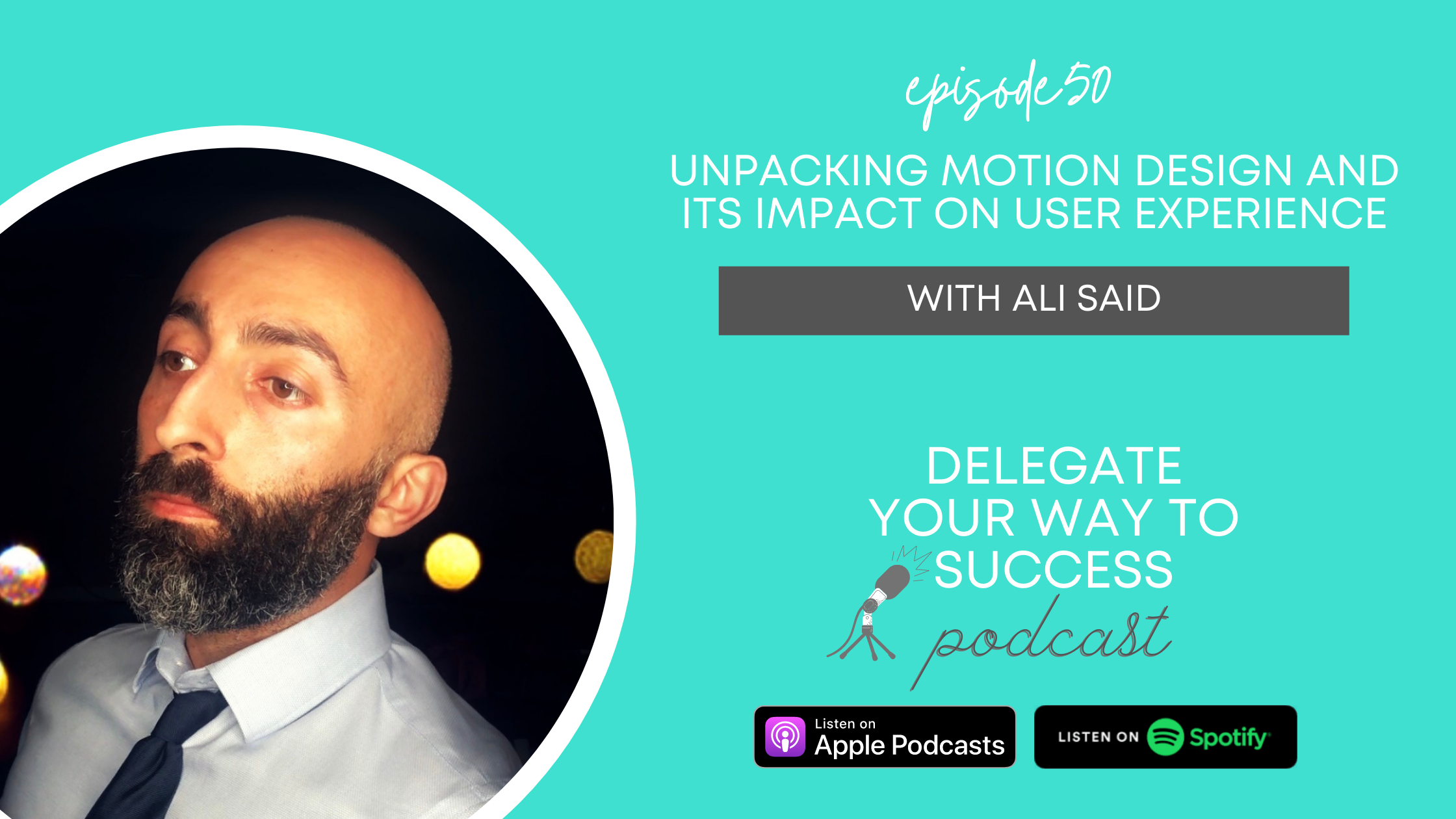
Hi! I’m Ali Said, a Product Motion Designer specializing in motion design for digital interfaces. I help startups and product teams create clean, high-end animation systems that make apps feel smoother, clearer, and more premium — from microinteractions to full motion libraries.
I elevate products through
UI Motion Design
Empowering Users
through Motion Design.
Hi! My name is Ali Said. I'm a UX Motion Designer based in the Bay Area. I provide UX Motion Design services to businesses and agencies. UX Motion Design is a relatively unknown aspect of design that can significantly improve user experience, boost engagement, and drive profitability.

“As a designer it is crucial to be able to pitch and sell your designs. Knowing the vocabulary and informed reasoning will help you get traction of your design by the stakeholders and team members. This workshop has helped on that.”
“Our team learned how the language and vocabulary of motion in user experiences differs from classic motion design. These foundational elements help inform our decisions in regards to ongoing instruction from Issara.”
“A solid workshop that explains the principles of motion in user experiences. This helps our developers, designers, and product managers develop vocabulary and mental models which will enhance our communication quality.”
“As a designer it is crucial to be able to pitch and sell your designs. Knowing the vocabulary and informed reasoning will help you get traction of your design by the stakeholders and team members. This workshop has helped on that.”
“Our team learned how the language and vocabulary of motion in user experiences differs from classic motion design. These foundational elements help inform our decisions in regards to ongoing instruction from Issara.”
“A solid workshop that explains the principles of motion in user experiences. This helps our developers, designers, and product managers develop vocabulary and mental models which will enhance our communication quality.”
-min.png)

Audit
I begin by auditing the product experience to identify areas where motion can meaningfully improve usability, clarity, and emotion. I assess the interface across five key categories:
- Spatial design, to guide the eye and establish clear hierarchies through movement.
- Motion affordance, to subtly indicate interactivity or next steps.
- Gesture confirmation, to reinforce user actions with satisfying, intuitive feedback.
- Latency masking, using animation to hide or soften delays in system response.
- Brand expression and delight, where motion adds personality and emotional resonance without getting in the way.

Design
Anytime the UI transitions from an initial state to a final state (navigation, gestures, loading states, confirmations, expansions, component interactions), I map motion opportunities that can improve clarity, responsiveness, and user flow.
From there, I design motion intentionally as a system, not a collection of isolated animations. I break motion down into two categories:
- Systemic motion patterns that can be reused across the product (navigation transitions, modal behavior, component behavior, easing language)
- Bespoke motion moments that are more choreographed and reserved for high-impact experiences.
Because motion is only valuable if it ships, I prioritize designs based on engineering lift—separating what can be implemented quickly within an existing framework from what requires deeper choreography and custom development.
All motion is designed within the constraints of the product’s dev framework, and delivered with implementation-ready assets including reference video files, behavior documentation, and detailed timing specifications that map how properties like position, scale, and opacity evolve over milliseconds.
The result is motion that is scalable, consistent, and engineered for accurate implementation.

Dev Handoff
Finally, I translate each animation into engineer-ready motion specifications, documenting every interaction with precise timing, easing curves, and behavioral logic. My timing specs break down motion at the property level—mapping exactly how position, scale, opacity, blur, and other UI attributes evolve over time, measured in milliseconds.
This allows engineers to clearly understand the choreography of each transition (what changes, when it changes, and how it accelerates/decelerates), ensuring the final implementation matches the intended feel—not just the general look. The result is motion that ships accurately, scales into a reusable system, and eliminates unnecessary back-and-forth during development.


.png)
.png)


.png)
.png)
.png)


.png)
Temporal, LLC : UX Motion Design Services
.png)
• Custom Design System
• Low/High fidelity mockups
• UI Kits
• UI Component Libraries
UI/Visual Design Portfolio
.png)
• Web design and development
• Webflow generated html, css, js
.png)
• Wire framing
• Prototyping
• Card Sorting

Ali Said holds a Bachelor of Fine Arts in Animation and began his career in visual effects, contributing to major films such as Transformers, The Smurfs, Conan the Barbarian, and Star Trek. Working in VFX shaped his foundation in visual rhythm, timing, and emotional storytelling through movement—skills that still define his work today. (His credits can be found on IMDb under his name.)
Ali later transitioned into tech, bringing the language of motion into digital product design. He has designed for companies such as Google, Intuit, BMW, and LinkedIn, specializing in in-product motion systems that elevate usability and create premium product experiences. At LinkedIn, he helped integrate motion as a core component of the design system—pitching UX motion principles to leadership, securing engineering resources, and contributing to a scalable motion framework designed to improve clarity, navigation, and user feedback across the platform.
Ali’s work focuses on motion as a functional UX tool—not decoration. His specialty is designing system-level motion libraries that improve user experience through:
- Latency masking (making interfaces feel faster and more responsive)
- Gesture confirmation (reinforcing actions with satisfying feedback)
- Motion affordance (guiding users toward what’s interactive)
- Spatial transitions (streamlining navigation and maintaining orientation)
- Brand expression & delight (adding emotion without sacrificing usability)
His process is structured around three phases: Audit, Design, and Handoff. He begins by auditing products to identify high-impact motion opportunities, then prototypes animations grounded in UX principles, and finally delivers engineer-ready motion specifications with clear choreography, timing, easing curves, and behavioral documentation—ensuring smooth implementation across platforms.
Ali has also delivered talks for product teams on how to integrate motion thoughtfully into digital products, and has mentored designers on transforming motion into a scalable, functional part of modern design systems.If you’re looking to elevate your product through purposeful, systematized motion—or explore the intersection of art, technology, and emotion—let’s connect.
-min.png)


.png)

.png)

%20.png)

.png)

“As a designer it is crucial to be able to pitch and sell your designs. Knowing the vocabulary and informed reasoning will help you get traction of your design by the stakeholders and team members. This workshop has helped on that.”
“Our team learned how the language and vocabulary of motion in user experiences differs from classic motion design. These foundational elements help inform our decisions in regards to ongoing instruction from Issara.”
“A solid workshop that explains the principles of motion in user experiences. This helps our developers, designers, and product managers develop vocabulary and mental models which will enhance our communication quality.”
“As a designer it is crucial to be able to pitch and sell your designs. Knowing the vocabulary and informed reasoning will help you get traction of your design by the stakeholders and team members. This workshop has helped on that.”
“Our team learned how the language and vocabulary of motion in user experiences differs from classic motion design. These foundational elements help inform our decisions in regards to ongoing instruction from Issara.”
“A solid workshop that explains the principles of motion in user experiences. This helps our developers, designers, and product managers develop vocabulary and mental models which will enhance our communication quality.”

Adam Said - UI Designer
Adam is a UI designer with experience at UST, Bluecart, Akkio, Clox, Goji, Salve, Geon, Findpro, Cognition, Buysmart, JustFund, Unify, and Horizon3.ai. He leads design systems and keeps our output fast, clean, and scalable.

Christian Davis - UI Designer
Ex-Adobe UI leader with 12 years of experience across AI, DeFi, automotive, and air freight. Christian’s UI work has driven millions in seed and Series A funding—and always delivers where user behavior meets business growth.

Emily Asmann - Outreach & Parternships
Emily manages outreach by engaging with prospects, initiating meaningful conversations, and fostering relationships that open the door to new business opportunities. She ensures that potential partners have a clear understanding of Temporal’s value from the very first interaction.
-min.png)

“As a designer it is crucial to be able to pitch and sell your designs. Knowing the vocabulary and informed reasoning will help you get traction of your design by the stakeholders and team members. This workshop has helped on that.”
“Our team learned how the language and vocabulary of motion in user experiences differs from classic motion design. These foundational elements help inform our decisions in regards to ongoing instruction from Issara.”
“A solid workshop that explains the principles of motion in user experiences. This helps our developers, designers, and product managers develop vocabulary and mental models which will enhance our communication quality.”
“As a designer it is crucial to be able to pitch and sell your designs. Knowing the vocabulary and informed reasoning will help you get traction of your design by the stakeholders and team members. This workshop has helped on that.”
“Our team learned how the language and vocabulary of motion in user experiences differs from classic motion design. These foundational elements help inform our decisions in regards to ongoing instruction from Issara.”
“A solid workshop that explains the principles of motion in user experiences. This helps our developers, designers, and product managers develop vocabulary and mental models which will enhance our communication quality.”
Website created by Ali Said

.png)

.png)
.png)
.png)